-
 By: Janina Criador
- IT Guides, IT Management
- Last Updated On: April 2, 2024
- Comments 0
- ⏱️5 min read

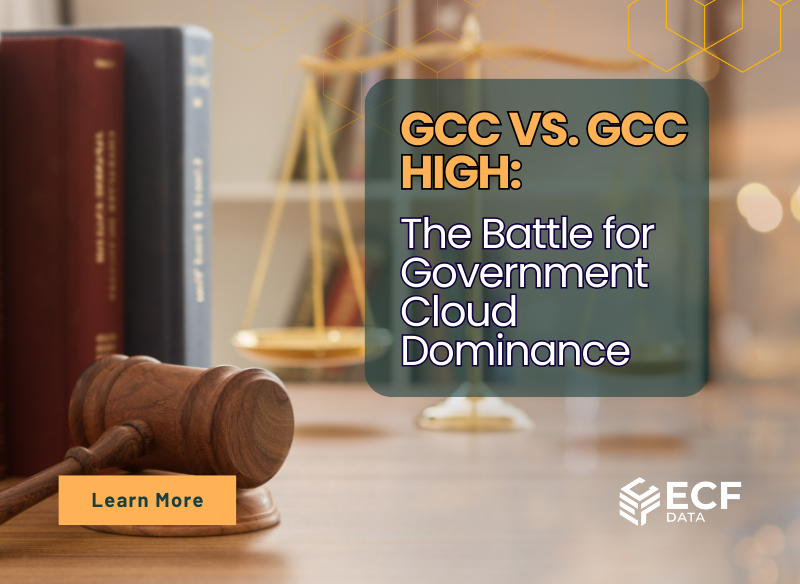
GCC vs. GCC High: The Battle for Government Cloud Dominance
In an age where data security and compliance are paramount, government agencies and organizations handling sensitive information face unique challenges. Enter Microsoft’s Government Cloud offerings: GCC (Government Community Cloud) High and GCC. Microsoft is promising better security and compliance features for government agencies. Understanding these options can feel like navigating a maze of complex terms and rules.
Many IT decision-makers and government officials face a common challenge: How do we keep our data safe in the cloud while following strict regulations? What are the critical differences between GCC High and GCC, and which option best suits our needs? How can we leverage these solutions to enhance collaboration and productivity without compromising security?
This comprehensive guide delves deep into Microsoft’s GCC vs. GCC High offerings. Moreover, we’ll demystify the complexities and shed light on their intricacies. Whether you’re a government agency striving to safeguard sensitive information, this blog aims to provide clarity and actionable insights. If you’re an organization navigating the intricacies of cloud compliance, it’s here to empower your decision-making process.
Let’s Unpack: Microsoft GCC High
Microsoft 365 GCC High replicates the Department of Defense (DOD) cloud setup. It is designated for utilization by DOD contractors, cabinet-level agencies, and authorized personnel.
GCC High called this way for its alignment with FedRAMP’s high-impact criteria. It operates on the Azure Government infrastructure and provides a higher level of security than standard GCC.
Why GCC High?
Assurance: Microsoft provides contractual assurance that its infrastructure aligns with DoD regulatory standards, which makes it crucial for compliance with CMMC requirements.
Compliance: GCC High ensures U.S. citizens’ exclusive access to your data. It is the only permissible solution for managing ITAR-related data within your organization.
Collaboration: GCC High simplifies and secures data sharing among DoD and GCC High users and organizations.
Administration: Unlike GCC High, certain aspects of Microsoft 365 Commercial and Government (GCC) require identification, deactivation, and continuous monitoring. Those fixtures ensure compliance with DFARS 7012, NIST 800-171, and CMMC regulations.
Who Needs GCC High
The list below only covers some types of information mandating GCC High. But the following—whether generated, overseen, or possessed—will consistently demand it:
- Designated Controlled Unclassified Information (CUI) requiring U.S. Sovereignty (comprising CUI labeled NOFORN, Controlled Defense Information, NASA, Nuclear Information, FERC/NERC)
- Export Administration Regulations (EAR)
- Federal Criminal Justice Information Systems
- International Traffic in Arms Regulations (ITAR)
- Export Controlled CUI
Let’s Unpack: Microsoft GCC
Microsoft GCC is a tailored version of the Microsoft 365 productivity suite. It is designed for government use rather than commercial purposes. While sharing most features and functionalities with Office 365, GCC’s data centers are primarily in the continental United States (CONUS), which complies with the FedRAMP Moderate standard.
Who Needs GCC
Microsoft 365 GCC caters to U.S. state, local, tribal, territorial, and federal agencies and affiliated organizations engaged with the U.S. government. However, it’s important to note that the GCC doesn’t require rigorous security measures in the GCC High environment.
These entities may deal with sensitive government information, excluding Controlled Unclassified Information (CUI) or data governed by International Traffic in Arms Regulations (ITAR).
GCC is typically sought after by:
- Various government agencies (federal, state, local, tribal, and territorial)
- Public educational institutions
- Government-linked healthcare entities
- Nonprofit organizations collaborating with government bodies
- Contractors and vendors engaged with government entities, excluding those handling CUI or ITAR data
To qualify for GCC, organizations must meet these criteria:
- Being a U.S. federal, state, local, tribal, or territorial government entity or an organization directly or indirectly connected with the U.S. government
- Having a presence in the United States or its territories
- Managing CUI or ITAR data does not require the heightened security and compliance controls mandated by GCC High.
See ECF Data’s Government Resources


Cloud Solutions’ Role in CMMC Compliance
Microsoft 365 Commercial and Government (GCC) can fulfill most CMMC’s needs using built-in security features. While GCC might suffice for CMMC, switching to GCC High may be necessary for specific Controlled Unclassified Information (CUI) and business needs. Transitioning to GCC High might be essential for your compliance strategy eventually.
Getting GCC High Licenses for Your Organization
ECF Data, an AOS-G (Agreement for Online Services Government) Partner, specializes in helping federal primes and subcontractors adopt Microsoft GCC High for CMMC 2.0 audits and DFARS 7012 compliance. With over 14 years of experience, the company sets itself apart in assisting defense contractors. It distinguishes its services in migration and deployment for Microsoft Office 365 GCC High.
Our extensive expertise encompasses robust documentation, verified configuration standards, compliance services, and managed security solutions. At ECF Data, we offer comprehensive support for organizations transitioning to Microsoft GCC High as part of their compliance strategy. Our services include:
- Preliminary system design and consultation
- Migration and deployment assistance
- Managed security solutions
- Configuration standards
- Program management
- Compliance advisory
The Importance of an AOS-G Partner
The Microsoft AOS-G Partner program is for organizations providing IT solutions to U.S. federal government agencies. It emphasizes this audience’s high standards and specific needs while giving partners the tools to meet and surpass expectations. The partnership focuses on innovation, security, and efficiency, which are crucial for government IT operations.
The Microsoft AOS-G (Agreement for Online Services – Government) allows both public and private sector organizations to buy Microsoft Government Cloud Community High (GCC High) licenses from authorized partners (for organizations with fewer than 500 seats).
ECF Data is among the few that have earned Microsoft AOS-G Partner recognition. If you are considering a migration to Azure GCC High or GCC to meet compliance standards, contact ECF Data for seamless migration and compliance consultation.